

Get The Look(book)
What makes a look? Not an outfit, and not just your style, but, rather, the overall visual intersection of your lifestyle, aesthetic choices, personal preferences, and their practical application? You know, your “vibe?”
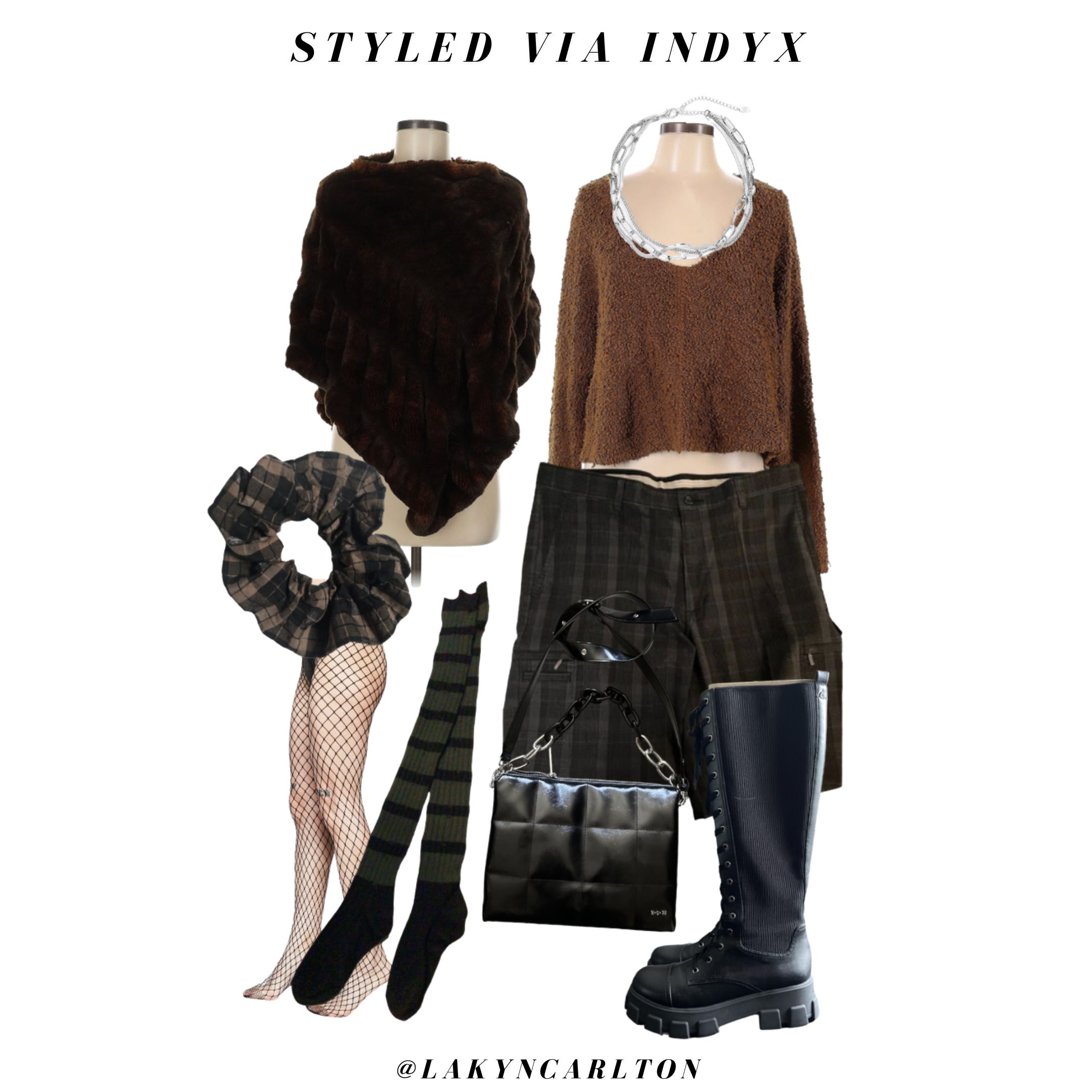
In the grand journey toward your fully realized personal style, it’s easy to get caught up in adjectives and aesthetics, sometimes even fantastical ideas of what you think you want to wear to the point that you’re ignoring—perhaps even denying—what you do wear. Obviously, there’s a lot of reasons those two ideals—how you want to dress and how you actually dress—may not align, but, if you’re constantly chasing something different and unable to focus on what’s in front of you, you could very easily end up stuck in a rut that doesn’t actually exist.
This is why it’s so important to constantly be checking in with your wardrobe: going through your clothes, putting things together in new ways, and trying to push the boundaries of your comfort zone, as well as using an app like Indyx (or Whering or Stylebook) to document your experimentation (you can also flat lay or put your experiments on and take pictures—that counts!). That said, I know it’s difficult to look at your wardrobe with fresh eyes when you only have the eye(s) you’ve got. That’s why I’m here.
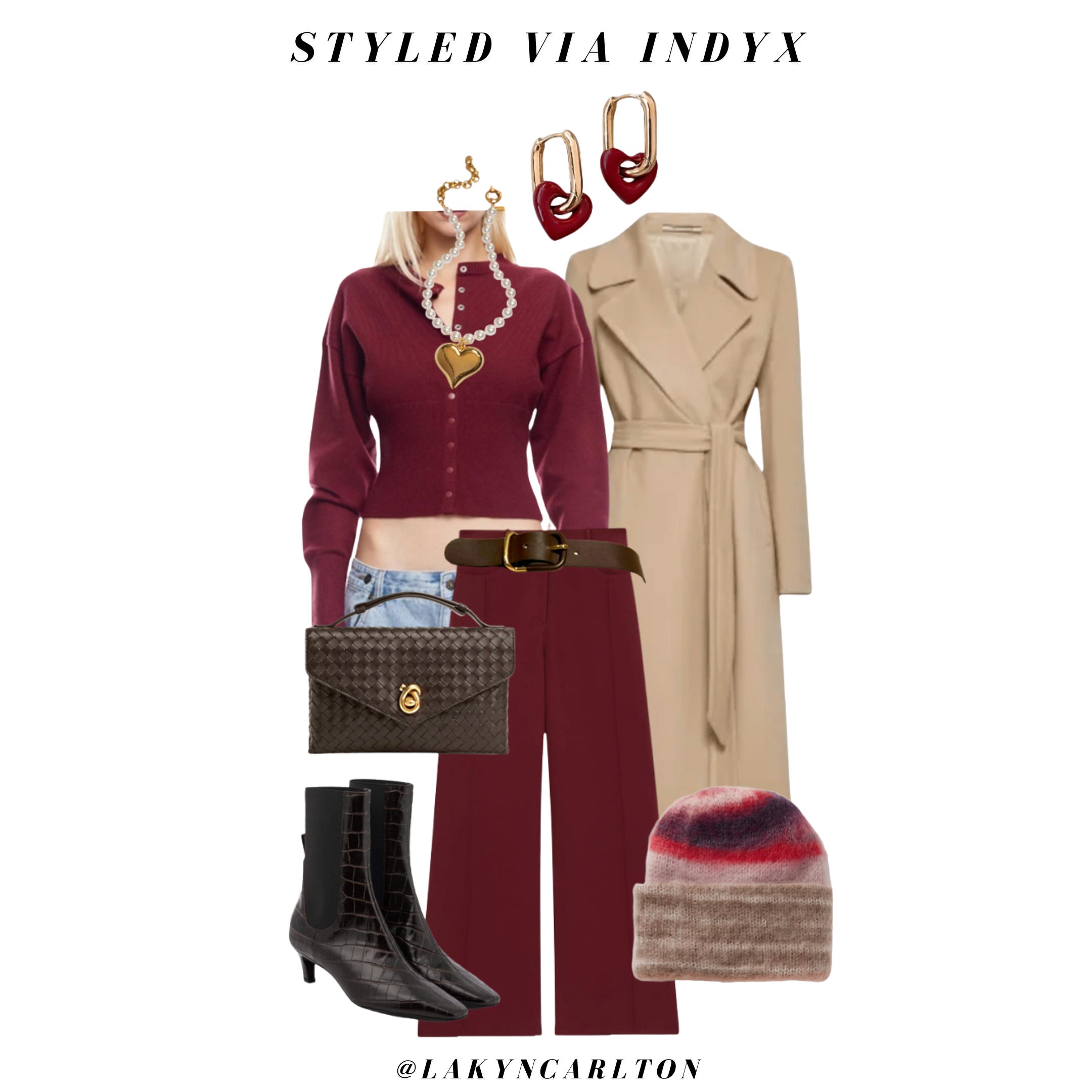
I’m going to walk you through how you can determine your overall look by breaking down how I seek to understand someone’s look when I’m working on a Lookbook via Indyx.
And, of course, you can click here (and use code lakyncarlton for $10 off) to book your Lookbook (or Mini Lookbook) with me if you fancy having my eyes on your closet.
The Evaluation
No matter the size of your wardrobe, there’s a lot to see, and I want to take in as much as I can before I do anything else. The beauty of viewing a/your wardrobe on Indyx (as opposed to, say, in your closet) is in The Quick Scroll. You can literally glance at your wardrobe and immediately get an overall “read” on what’s there, such as: What colors are most present/consistent? What fabrics and details stick out immediately, like lace or linen or metal hardware? What brands keep popping up? And—most importantly—what stands out? In a sea of black cotton and denim—what are these bright pink trousers doing here? Or, in a largely colorful and print-heavy closet, why your only winter coat black? I’m not judging, I’m just asking. And you should be asking yourself: what doesn’t make sense here? And how can we make it make sense? More on that in a bit.
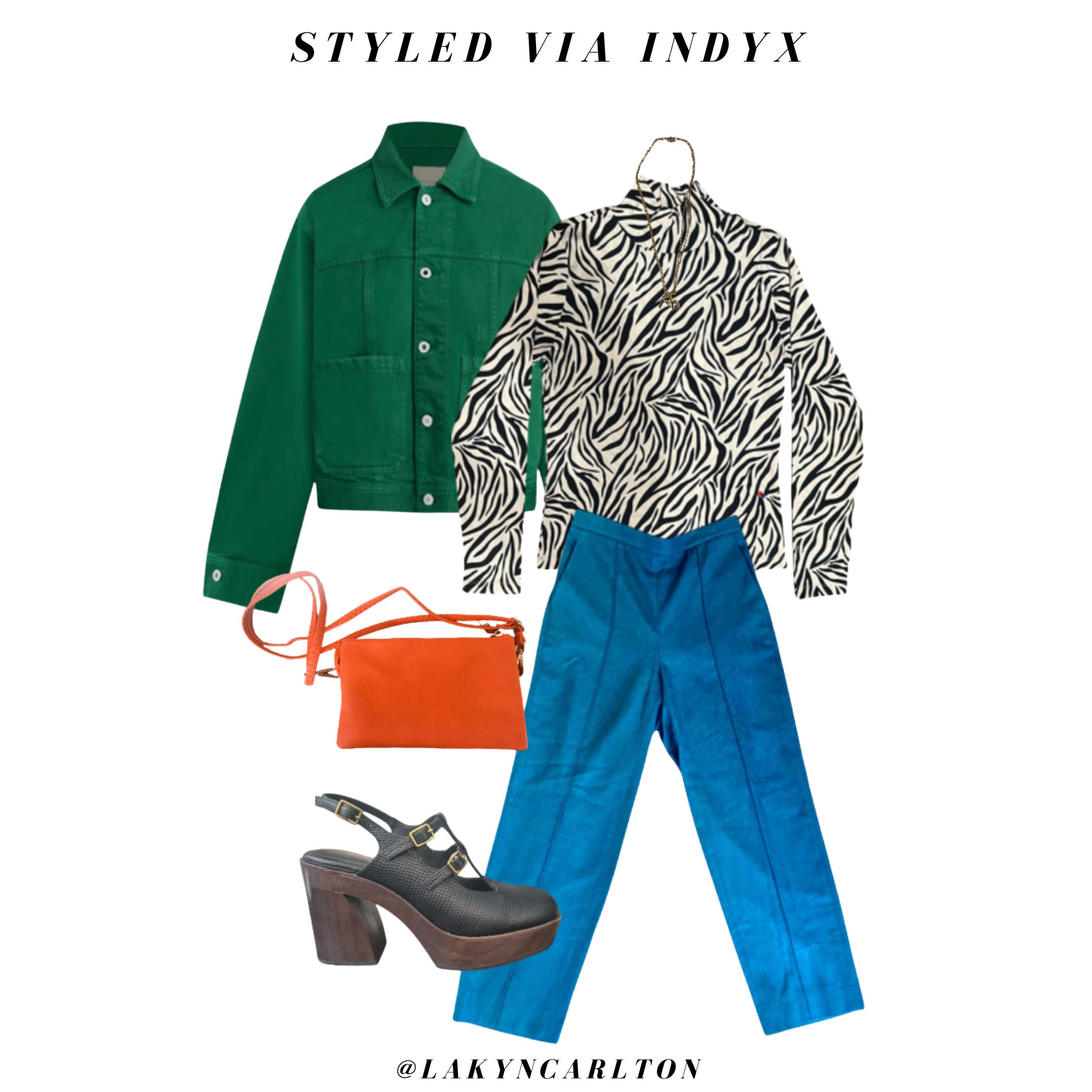
On the second scroll, we’re gonna dig in just a little deeper: What’s the ratio of tops to bottoms (to one-pieces, if applicable)? Where are the accessories? What kinds of pieces do we see repeated over and over again, like wrap tops or oxford shirts or high-waisted jorts?
It’s important to also take a look at the outfits you’ve already made: what are the formulas? Not just “sweater + pants” but, are you more of a little-on-top-big-on-bottom person, or the inverse? Do you tend to wear layers or keep it more straightforward? How do you pair colors and prints? And how can we take this to the next level while still honoring how you tend to like to see yourself?
Finally, we’re gonna pick some personal favorites—a mix of those standouts and more foundational/basic pieces—and look to see how you’re styling them and what, if anything, we could change. Say you have something blue that you consistently style with black, or a print you only style with certain solids, the goal is to consider pairings that may be less obvious and, of course, make it a point to utilize pieces that aren’t being loved as much as they should.
The Looks
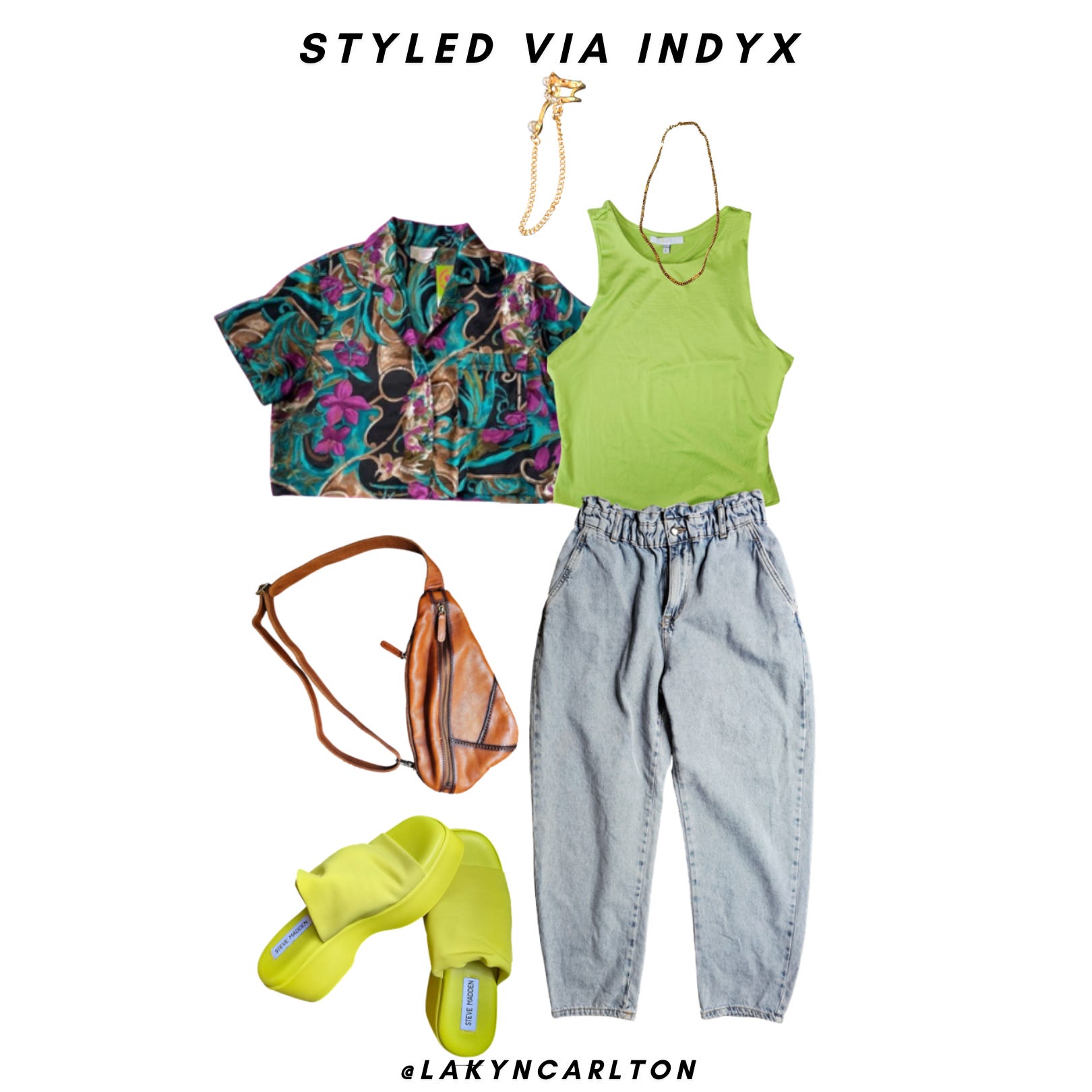
A Lookbook on Indyx comes with 10 looks, and a Mini comes with 3. I think most people’s look can be fully summed up somewhere in the middle, but the number isn’t so important: it’s about the intention. It’s easy to get caught up in just trying to prove your clothes can make a bunch of outfits; we want to make sure those outfits are you and that starts with how we build each one.
Make It Make Sense
Sometimes, a piece stands out in our wardrobe because it’s not really us but spoke to us nonetheless; other times, a piece stands out in our wardrobe because it’s so incredibly perfectly us, but that magic hasn’t struck twice. Styling your standouts means figuring out which camp they fall into.
For the standouts that aren’t really you, can you make them meet you where you are? Say you’re typically very minimalist, but you splurged on a random multi-colored psychadelic printed blouse: what if you tried styling it the way you would any neutral or simple top you already own, with jeans, dainty jewelry and the shoes you wear everyday? You don’t have to become a different person or try to reinvent the wheel.
When the standout is so you, though, it’s worth taking the time to first figure out why. Is it the perfect topper to any outfit? Is it that elusive “going out top” that makes you feel sexy even after a huge dinner? How can we capture that vibe in all your looks? Maybe it’s the neckline or the sleeve length or the rise on the pants. When you get down to basics, you might realize you actually have a lot of pieces just like that one that, on first glance, didn’t fit in. Focus on styling those, and see just how easily your look starts to shine through.
A Formulaic Approach
Outfit Formulas are, hands down, the most important part of your look. Two people can have almost identical wardrobes, but, the way they put things together can be night and day, and still, even that’s not the complete picture. Just look at how different a cardigan + tank top + trousers can look, and how these are two entirely different vibes for two entirely different people (or days, as the case may be):
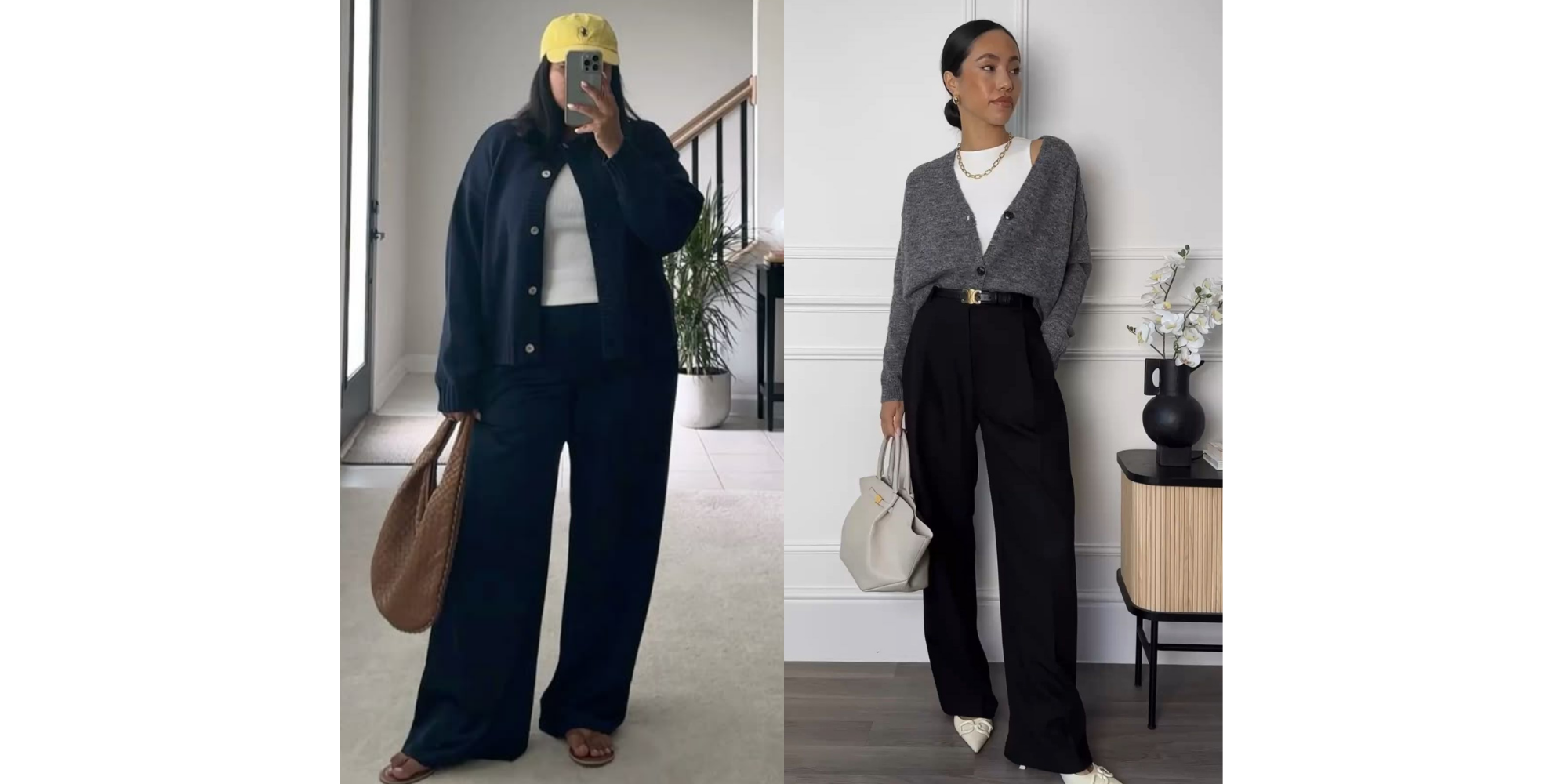
Outfit Formulas usually manifest in your wardrobe in one of two ways: As a foundation that you build on top of or as a framework you play within. The foundation is simple: you have your base, and then the things you add to change your look day to day. So, say, a button up and jeans is your foundation, and depending on the day, maybe you add a blazer or a sweater, or tuck your jeans into your boots. The basic pieces are the same, and what you add is typically functional. Usually, you can push the boundaries here by just combining your basics in a different way: new color combos, mixing patterns, changing out the shoes, or just adding different accessories. Again: you don’t always have to reinvent the wheel.
Sometimes, though, you may encounter what I call The Summer Problem, aka, how do you make a cool outfit when your coolest outfits are way too much to keep you cool in the summer? Others might know this as “I-can’t-wait-til-fall-so-I-can-really-dress” Syndrome, or The “It’s-too-damn-hot-for-all-these-clothes” Effect. It’s a tough problem to have, as it often necessitates incorporating separate warm-weather options and formulas, or, simply living with lackluster summer vibes.

I believe, though, it’s situations like this—a limitation that could require new clothes but doesn’t have to require new clothes—that ultimately help you define what your look is, and it’s where I feel creating (or requesting) a Lookbook assists the most in forcing you to really sit down and just make outfits, and, in this case, we need the outfits we make to answer a question: What are those pieces actually doing for you (besides, presumably, providing some sort of practical function)? Are they adding structure? Contrast? Weight? Polish? Drama? How can we tweak your base formula to meet that same goal? Come on, mama/papa/theytha, let’s experiment!
When it comes to formulas that are more of a framework, it’s less about the pieces and more about how the pieces relate to one another. The most famous, of course, is big-pants-little-top but there’s also structure + slouchy, cropped layer plus long lines, even neutral plus pop of color.
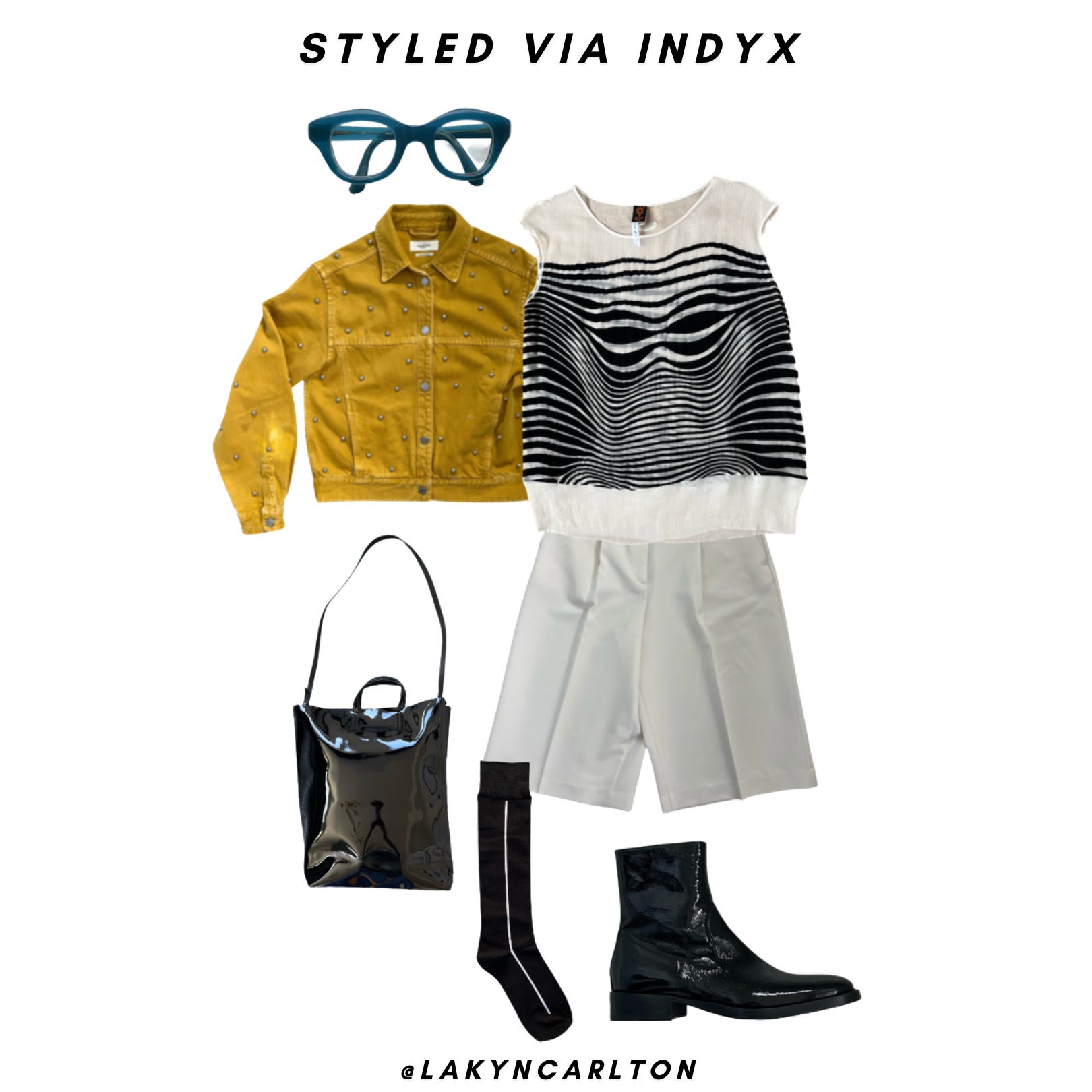
The beauty of the framework is that it’s flexible, but, if you’ve grown very comfortable in your formulas, it may be difficult to figure out where to go. This is where I like to focus more on the styling, rather than the combinations. Can we tuck it in? Can we button our shirt differently? Can we cuff our pants or pop a collar? The power of the jujj cannot be overstated, not just in how it can change the way our clothes look and feel on us, but also in how it can change how our clothes look with each other. If you button your shirt at the top, maybe you wanna untuck your shirt. If you untuck your shirt, maybe you’ll feel comfortable wearing a more fitted skirt without feeling too sexy/dressed up/exposed.
It’s a bit harder to communicate this in a flat lay or a screen, though. Which brings us to what is, arguably, the most important part of the Lookbook.
The Breakdown
Longtime readers know: I love asking why. Breaking down our choices—the good and the bad—is what helps us do better. When I’m doing a Lookbook, this is the part I leave for last. But you should be doing it twice: once when you put the look together, and again when you put it on. To start: Why are you putting this together? Why do you think it’ll work? What might make it not work? How is it similar to what you normally wear? Is there anything that makes it different from what you normally wear?
And once you have it on: Does it look how you imagined? If no, does it still work? If yes, what’s your favorite part of the look? Can you recreate it with other pieces in your wardrobe? If no, why not? If yes, is it your look?
What makes a look? Your look is your throughline. It’s what you reach for no matter the occasion: the proportions you repeat, the colors you love, the combinations that make you look in the mirror and say “damn, I look good as hell!” When you slow down enough to see it, and allow yourself to experiment within the parameters of your existing wardrobe without the pressure to buy something new, you allow your closet to really come together as more than just a collection of outfits, but a fully realized reflection of you.
You don’t have to chase your look, just like you don’t have to create your personal style: you just have to allow yourself to see that it’s already there.
Excellent and expert guidance, thank you!