

Polyester is magic. For a few short decades—from its invention to its eventual explosion in production and subsequent decline in average quality—polyester was praised as a miracle fiber that resisted stains, didn’t shrink, dried quickly, and never needed to be ironed. It’s easy, in our current synthetic world, to take these traits for granted, but, when doing a load of laundry used to mean hours of hand washing and days of hanging dry and pressing only to have to turn around and do it all over again—because the average person only owned a few outfits—it’s not hard to imagine how this new, fabulous fiber felt a little bit like freedom.
Vintage lovers talk about how the synthetics of the past felt and held up much better than the synthetics of today, but, that vintage fabric quality does still exist. It was expensive then, and it’s expensive now. The problem is, in the sea of brands that put profit above quality product and overcharge for crap quality, it’s growing increasingly difficult to figure out whether the expense can be justified.
What makes things even more difficult is the fact that fiber content alone doesn’t really tell you anything about how a garment came to be or what it will feel like to wear or even how it should be priced. There’s synthetics that feel like silk and cost just as much, and there’s natural fibers that feel like sandpaper and cost a few cents per yard. Any fabric can be sewn beautifully (or poorly) and the labor it takes to do so, in all but a few very specific cases, is what makes up the majority of the cost to make anything.
I would love to return to a time when most of the clothes available on the market were made of natural fibers, but that doesn’t mean no synthetics at all: it means a major reduction in how much clothing we produce (and purchase); it means investing more resources in what we do with our clothing (and our plastic, and our plastic clothing) once we’re done with it including more effective and efficient recycling methods as well as management of microplastics; and it means both brands and consumers making better choices that increase the overall quality, wearability, and longevity of our wardrobes. Textile production accounts for just 1-2% of global petroleum consumption, so, while reducing our dependence on fossil fuels can start in our closets, it shouldn’t end there.
This article doesn’t seek to tell you why you should or shouldn’t wear certain fabrics—there are plenty of reasons to want to avoid synthetics, and you don’t have to explain yours to me or anyone else. But, synthetics are not just cheaper alternatives to natural fibers: they can do things that natural fibers can’t, and it helps to understand what those things are and why certain decisions are made when it comes to making clothing. I’m only here to educate, because educated consumers are better consumers.
So, what traits can synthetic fabrics have that natural fibers don’t, and what are the actual, legitimate reasons for using them?
Please note: Any specific brand mentions are not endorsements of said brands.
Stretch and Support
If you look at the material tag on your average bra or shaping garment, you’ll likely see a mix of polyamide, aka nylon—a fiber that was invented to replace silk in parachutes and that can literally stop a bullet—and elastane—a fiber that can stretch up to 8 times its length and snap back without losing its shape. Compared to the rigid structure of a corset or the literal cage-style construction of a bullet bra, today’s bras and shapewear are relatively—perhaps a bit deceptively—simple. Yet, they’re able to support even the largest busts and “snatch” (aka redistribute body fat) while remaining lightweight, flexible, and machine washable.
There are silk and cotton bras, of course, and they’re growing in popularity, but, it’s worth noting, if you require quite a bit of support, even silk and cotton options like the ones by Molke will often still feature bands made of rigid but stretchy powermesh, elastane/elastic, or nylon, because proper support comes from the band, and without a band that can both support several pounds of weight and mold to your body without getting stretched out easily, your bra will simply not be able to do its job for very long. 100% natural fiber options tend to have limited size ranges for this reason.
Another thing that was difficult to achieve before synthetics? Compression. That is, safe compression. You can use bandages and wraps to apply pressure post-surgery or to alleviate arthritis or other joint/circulation issues, or to flatten/bind the breasts, but, doing so improperly can cause a whole host of issues. Compression garments (including waist trainers!) in a range of strengths (measured in millimeters of mercury) are, for all intents and purposes, medical devices that wouldn’t be nearly as possible or accessible today without synthetic materials.
Shape and Texture
In 1909, Mariano Fortuny—no doubt inspired at least in part by the pleated linen gowns worn by wealthy Ancient Egyptians—filed a patent for his method of creating what’s widely considered the very first plissé fabric.
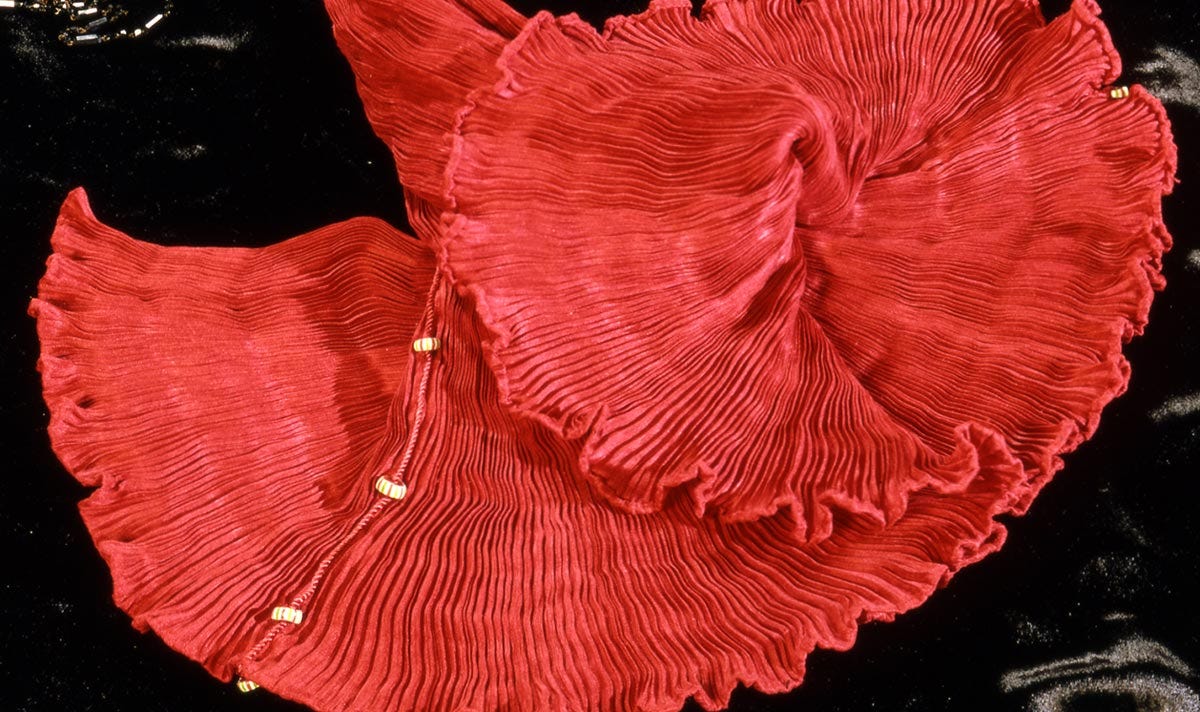
To achieve this texture, the pleats were meticulously folded by what had to be incredibly nimble fingertips while the fabric was wet, likely sewn temporarily to compress and hold the folds tightly in place, then set with heat. Fortuny (and his wife) used this technique to create the iconic Delphos gown, some of which still exist, today, pleats perfectly intact after a century. And if you threw one in the washer, the pleats would almost entirely disappear. That’s not the case with most plissé garments we see today—which are made of synthetics, usually polyester—and it’s because synthetics can be permanently set using high heat to essentially melt them into shape.
Synthetics are pretty great at holding shape without needing heat, too, which is why they’re so resistant to wrinkles, and why even super lightweight synthetic fabrics can be cut and sewn into unique, voluminous shapes without needing any additional internal structure to keep its form. Sometimes, all you need is a small percentage of synthetic fibers: 16% polyamide that’s been combined with 84% cotton on the skirt below by Rohe (left) and the pink polyester lining on the cotton dress by April and Alex (right) are both enough to help provide the stiffness needed for an exaggerated shape, but keep the garment lightweight enough for casual wear…


Of course, sometimes designers just have a vision. And that vision requires development of an all new textile. Norma Kamali’s drapey shirt dresses come to mind:
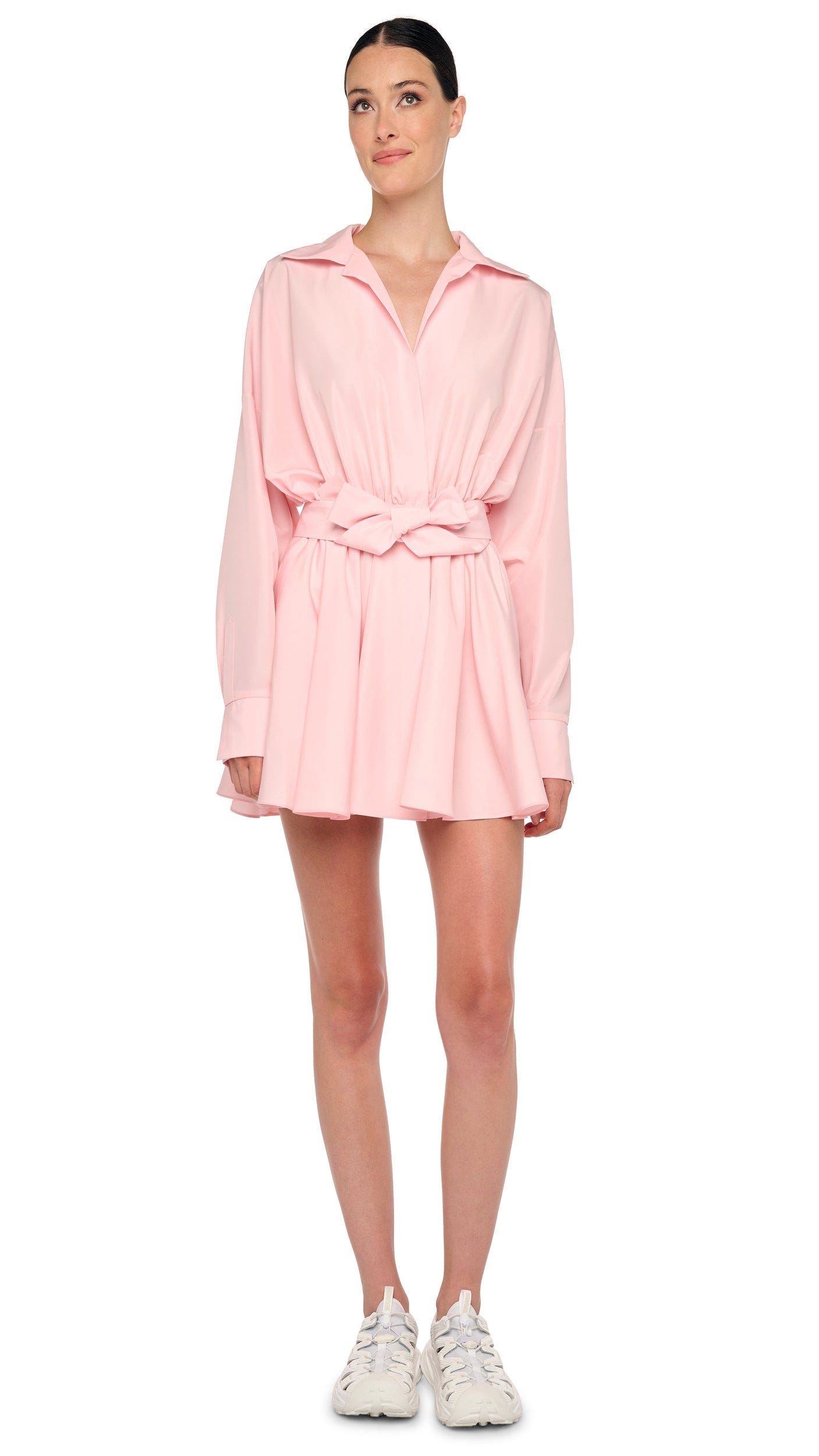
As someone who has owned three of these dresses, the fabric is….weird…in a good way. Somewhere in between neoprene (scuba fabric) and the slinky jersey Diane von Furstenberg’s wrap dresses are made of, it drapes beautifully with light stretch and feels substantial without being heavy, is cool to the touch, and neither wrinkles nor frays, allowing for a raw edge detail that’s more cool than cheap looking (as raw edges tend to be). The site calls it a poly habotai, habotai being another name for Chinese silk, so, it’s a poly meant to replicate silk, but, it doesn’t feel like any silk I’ve ever felt before. It’s important to note, though, you wouldn’t know any of this unless you actually felt it, as the material tag simply says what it is: 100% polyester.
Color and Print
There once was a time when you couldn’t afford to wear your favorite color.
Contrary to popular belief, we’ve had the ability to make vibrant, colorful clothing for a long time—like, since 5000BCE—, but it wasn’t cheap. The plants, insects, and minerals used to create these dyes were so scarce and required such extensive labor to process that only the wealthiest could afford to wear certain shades of red, blue, or purple. Dyes that were colorfast—i.e. wouldn’t fade easily in the sun or with regular laundering—were even harder to come by, so, if you were someone who had to perform manual labor, and therefore wash your clothes a lot more (as well as spend a lot more time outside) you were more likely to opt for muted, more accessible colors that didn’t need to be reapplied so often after washing—another thing we deeply take for granted.
That all changed with the development of synthetic dyes, most of which are now derived, in one way or another, from crude oil. Applying these dyes to synthetics—using, as usual, high levels of heat—creates color and print that is as close to permanent as we can get, but, even the best dyes will eventually fade from a natural fiber, especially if washed and dried regularly on high heat (ironic, right?).
Brands known for their bold, saturated colors and natural fibers like Nooworks recommend that you only wash your colorful garments when they absolutely need it to preserve the vibrancy, whereas even a synthetic of average quality can be washed hundreds of times without losing color.
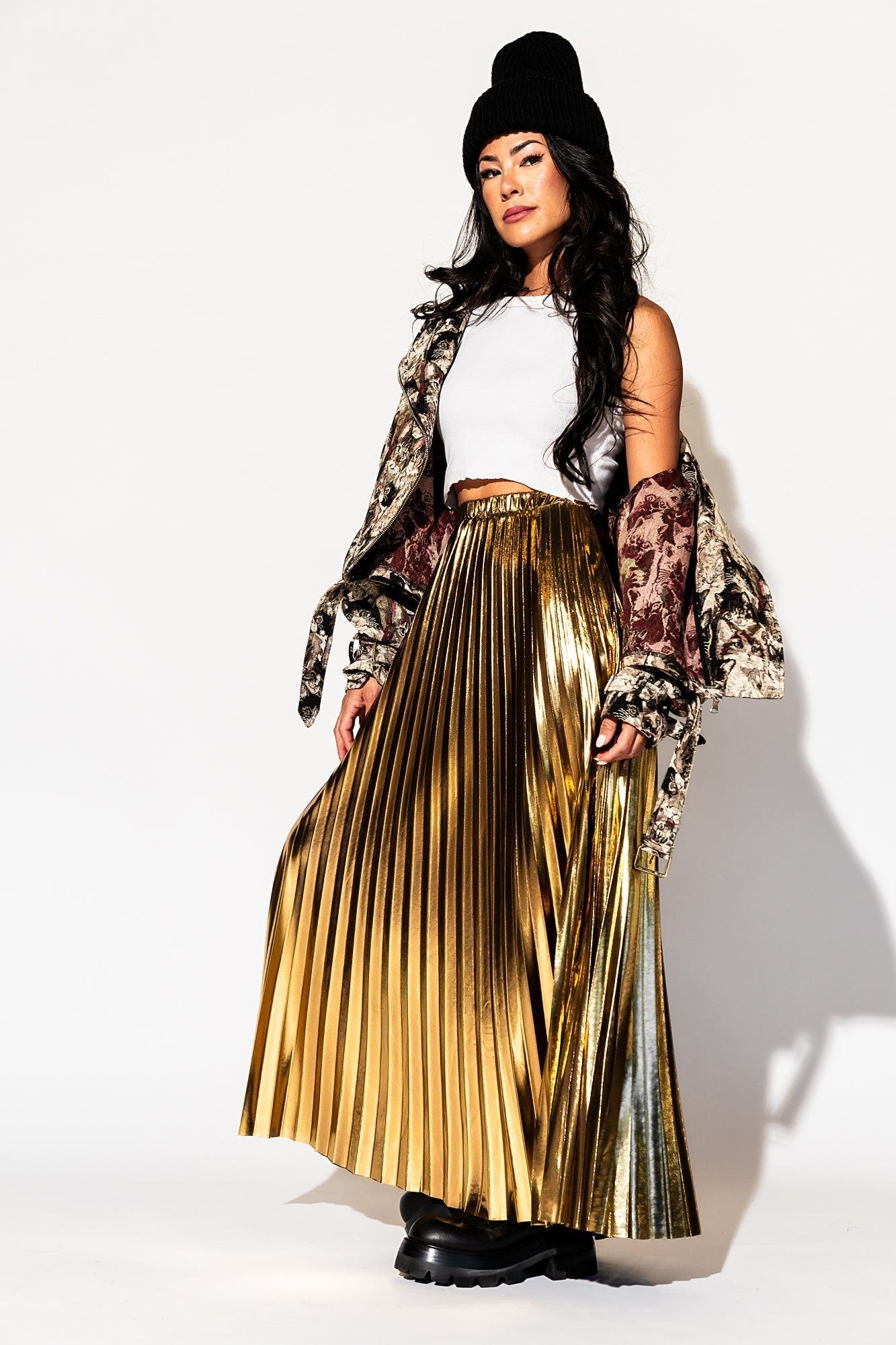
Somewhere in between texture and color, we have metallic fabrics which, naturally, were originally made by hammering metal into thin sheets, cutting them into ribbons, and weaving them with or wrapping them around other fibers. Can you imagine if the only way to achieve something like the skirt below (by Dressed In Lala) was by using pure gold?
Protection and Performance
We’re constantly making advancements when it comes to fibers, both natural and synthetic. Athletic brands like Nike and outdoor-focused brands like Patagonia spend millions of dollars developing fabrics that can do more: keep you warmer while staying lightweight, keep you drier while staying breathable, and provide compression while supporting the full range of movement required for vigorous physical activity.
To add even more protection, seamless bonding machines I mentioned above can be used to make garments that are protect the wearer by fusing fibers together rather than using traditional seams to join pieces of fabric: when dealing with clothing that may be submerged or that is meant to withstand extreme cold or high winds, even the tightest stitch can allow water or cold to penetrate, or turn into a stress point that could potentially break under pressure.
Natural fibers can, of course, be knitted in a “tubular” style that reduces seams, but, they may not be suitable if conditions also require other properties like hydrophobia (so it won’t absorb water) or impermeability (so it can’t easily be torn). Merino wool can be used for performance, but, it’s important to note that it is not hydrophobic but rather hygroscopic, so, it can absorb a certain amount of moisture and remain dry to the touch, but it doesn’t repel water completely making it unsuitable for extremely wet conditions without additional layers of protection. And neither cotton nor wool are ideal for activities in very jagged/rough environments as both can snag quite easily.
Care and Cost
You may have noticed a bit of a theme through this article: it’s not necessarily that certain features are outright impossible in natural fibers, but rather, they would require much more care to maintain and—in many cases—carry a much higher price tag than most consumers are used to.
When it comes to cost, it’s not always about shaving a few pennies off for a higher profit margin: Marcelo Gaia of Mirror Palais explained in a TikTok video that one of the reasons he made the midi version of a beaded silk mini dress in polyester rather than the original silk was because of the cost of the additional hand-beading as well as a desire to make it completely sheer, which is a bit harder to do with bias-cut silk, especially with the weight of all the embellishments.
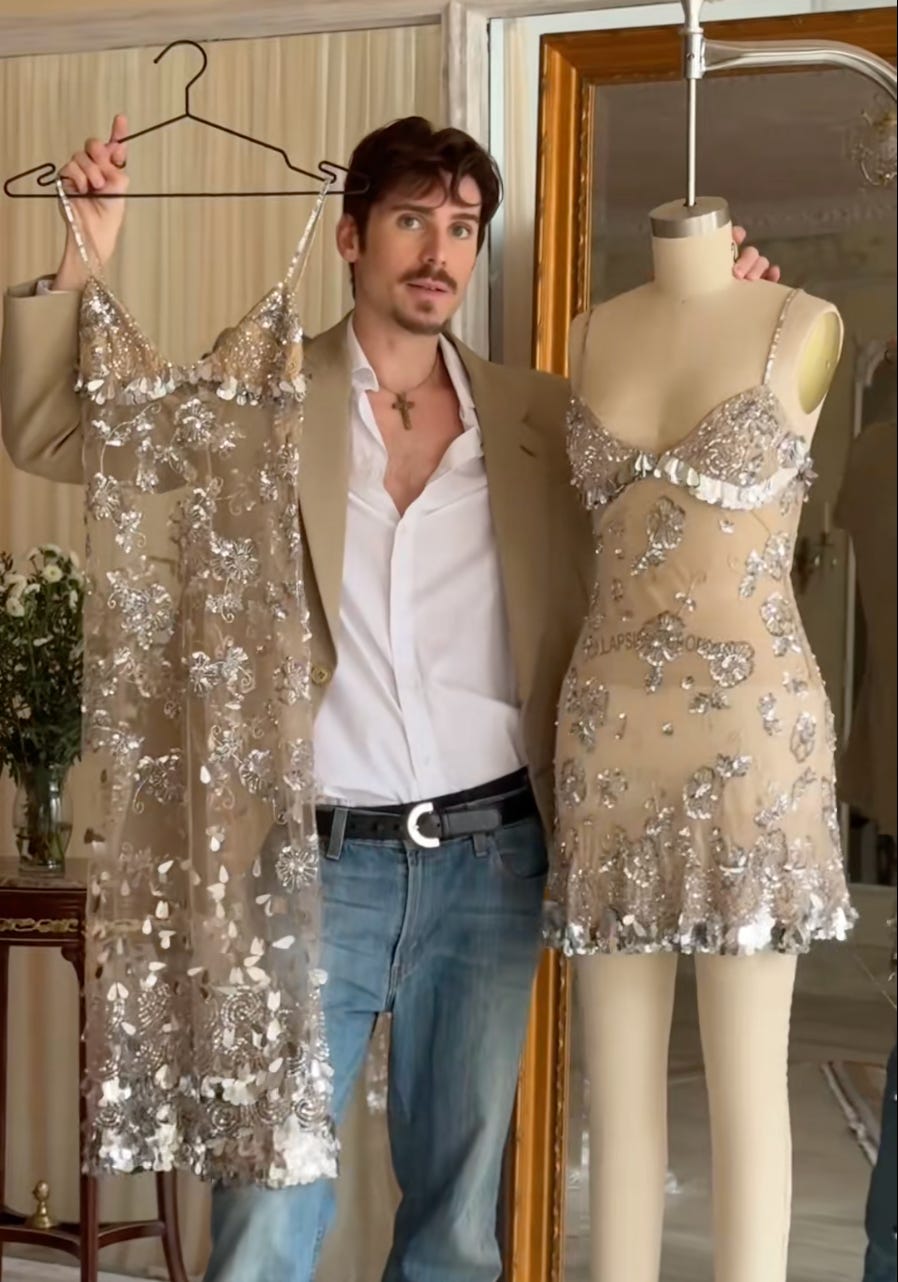
As a designer, you should know how fabrics work: which fabrics can perform in which ways, which ones will provide the best wearability while also staying true to your vision. You should also know what your customers can bear, and little decisions add up: maybe you can sell a $1,500 silk dress (as MP does), but, you may not be able to sell a $2,500 or $3,000 one, regardless of the fabric (outside of a few very special pieces).
Beyond just price point, designers must know what their customer will bear in terms of care. Buyers who are used to lower prices are also used to lower maintenance: they’re a lot less likely to hand wash or hang dry their garments, meaning that 100% cashmere design has to become 50% cashmere mixed with nylon to ensure it’s wearable after being tossed in the washing machine and dried on high heat.
Fabrics like acetate—which I’ve not mentioned, yet—are annoyingly common as linings, but require a lot less upkeep as they’re resistant to moths and mold, making them great for those pieces that get worn rarely like evening gowns or suits. Clothes are so inexpensive and accessible now that we’re much more likely to buy these things new for each event, but, these textiles were developed in a time when you only had one or two “nice” sets of clothes, and couldn’t afford to just replace your good dress because it was full of holes after a year of simply hanging in your closet.
When it comes to The Great Polyester Debate, what it comes down to is intention. Synthetics were never intended to just be cheap stand-ins for “better” fibers: they were invented and developed for a reason—they exist to solve problems that many of us have forgotten we ever had. The issue isn’t their existence, it’s the massive scale at which we use them, but, that would be true of any fiber: we cannot produce enough cotton, linen, silk, or wool to keep up with the demand for clothing we have, today. The resources required—the water, the farmland, the soil, the labor—are all finite, and we’re already pushing the limits.
When we reduce fabrics to “natural good, synthetic bad” we lose the nuance that allows us to make smarter choices. A well-made synthetic garment can outlast a poorly made natural one. A thoughtful blend can offer properties that neither fiber could achieve alone. And a high-quality textile, natural or otherwise, reflects time, skill, and intention—things that are increasingly rare in a climate that prioritizes speed over all.
I have long said that sustainability is not just about what our clothes are made of: it’s about how much we make, how much we buy, how long we keep it, and what we do when we’re done with it.
At the end of the day, you don’t have to treat your clothing as disposable, regardless of the fiber content.
So don’t.
Thank you so much for this. So important. I love and appreciate your work so much!
What a wonderful lesson on fabric. So important to me in my journey to a sustainable and intentional closet. Thank you!!!